The History of AI Image Generation: From Neural Art to Modern Models
Trace AI image generation from early neural networks through GANs, diffusion models, text prompts, and today's debates about creativity and trust.
Introduction
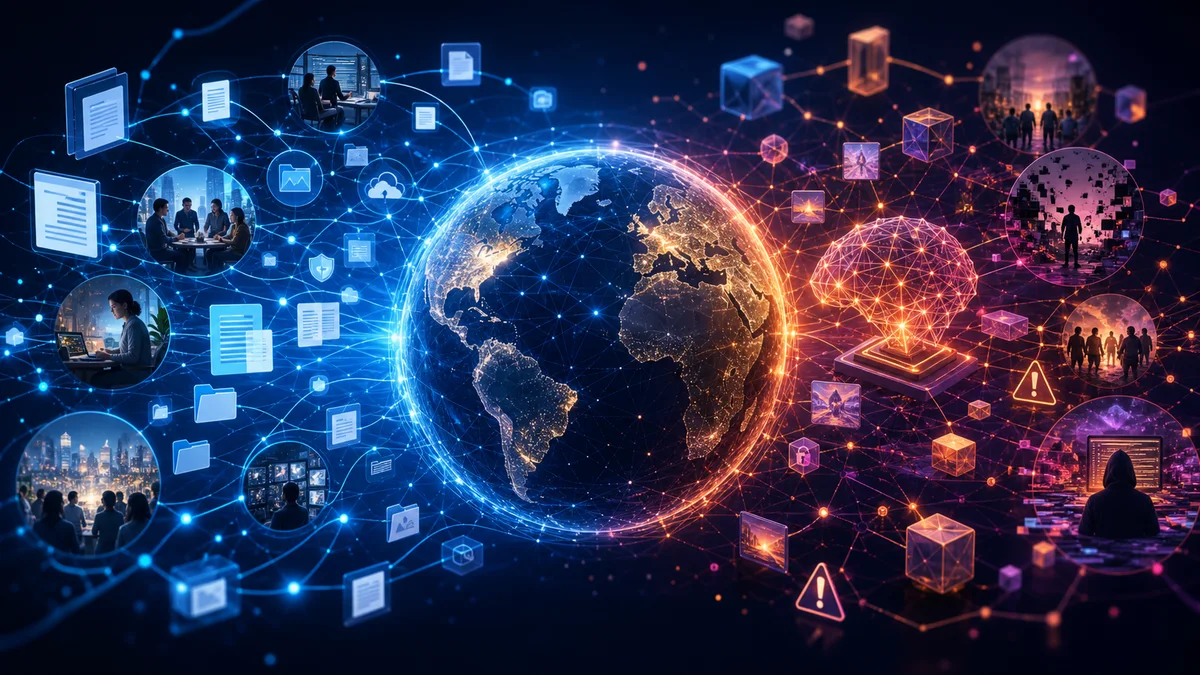
AI-generated images can feel like a sudden invention because text-to-image tools reached millions of people within a short period. The underlying history is longer. Researchers spent decades developing neural networks, computer vision, probabilistic models, graphics datasets, and hardware capable of large numerical workloads. Several separate lines—image recognition, representation learning, generative modeling, and natural-language understanding—eventually converged.
The result is not a database that simply retrieves one matching picture, nor a human-like imagination operating without influences. Modern generators learn statistical relationships from training data and use them to synthesize new pixel arrangements. Their capabilities create legitimate artistic and commercial opportunities alongside questions about consent, copyright, labor, bias, misinformation, and environmental cost.
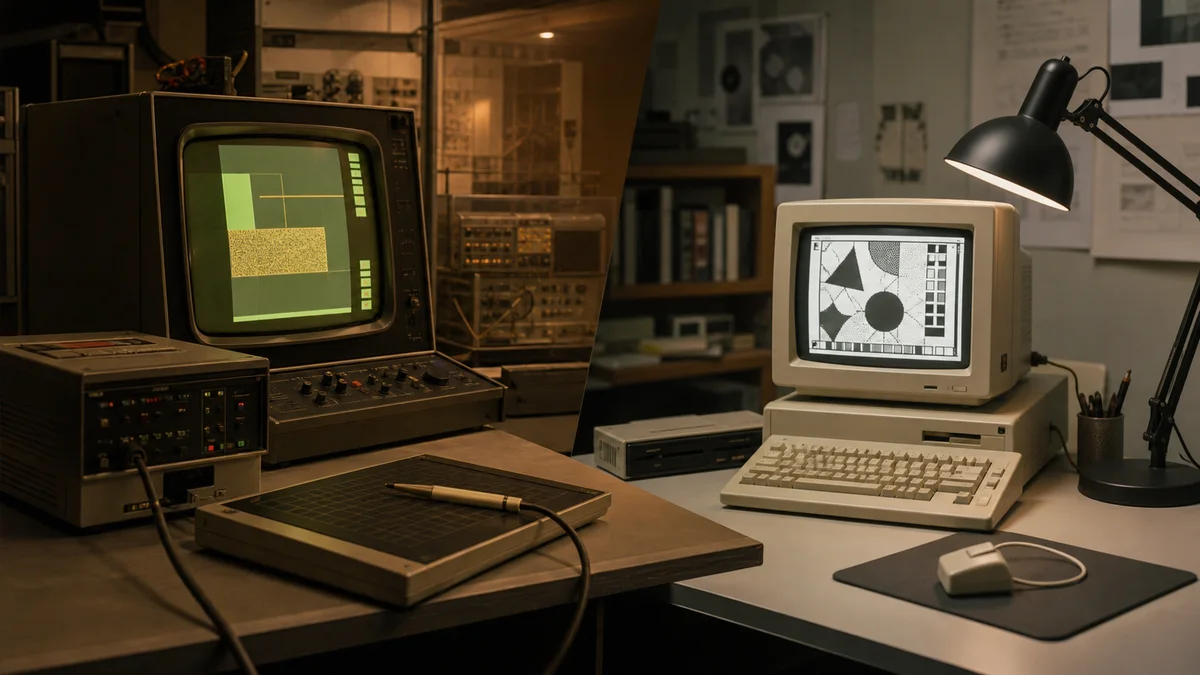
Early neural images and generative models
Neural networks were used for pattern recognition long before they could produce convincing high-resolution images. Autoencoders learned compressed representations and reconstructed inputs. Variational autoencoders introduced a structured latent space that could be sampled to generate variations, although early results were often soft or low resolution.
In 2014, Ian Goodfellow and collaborators introduced generative adversarial networks. A GAN trains a generator to produce samples and a discriminator to distinguish generated samples from real data. The competition drove rapid improvements in faces, objects, and scenes, but training could be unstable and outputs could lack diversity.
Neural style and public imagination
In 2015, Leon Gatys, Alexander Ecker, and Matthias Bethge demonstrated neural style transfer, separating aspects of an image's content from statistical features associated with another image's style. The method showed broad audiences that learned visual representations could recombine imagery in surprising ways. Consumer apps soon offered dramatic transformations, although calling a living artist's identity a generic “style” later raised ethical concerns.
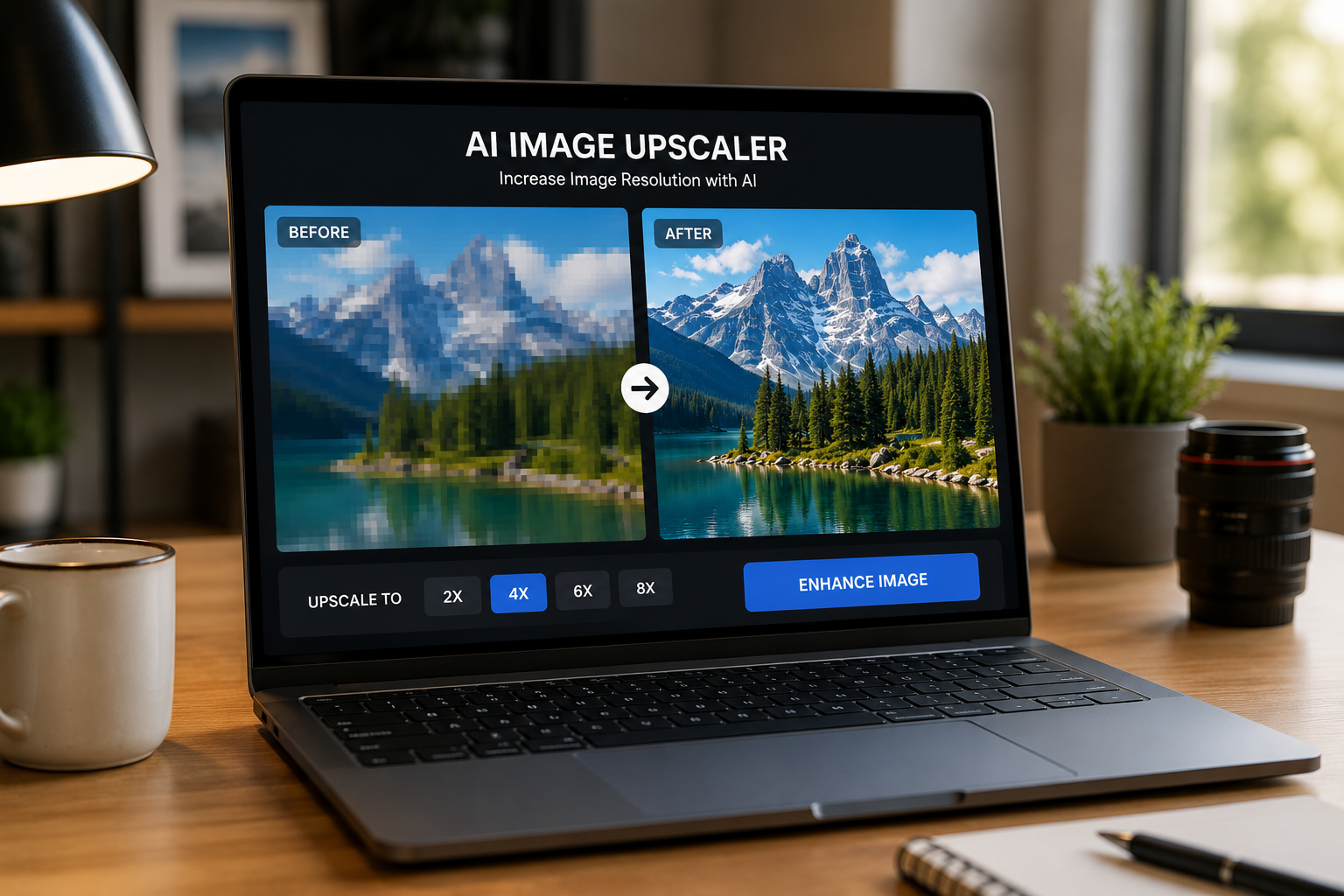
GAN systems progressed toward increasingly realistic faces and controllable attributes. Tools also supported inpainting, super-resolution, colorization, and face synthesis. These specialized operations prepared users for AI as an editing partner before open-ended prompting became common.
Diffusion and text-to-image systems
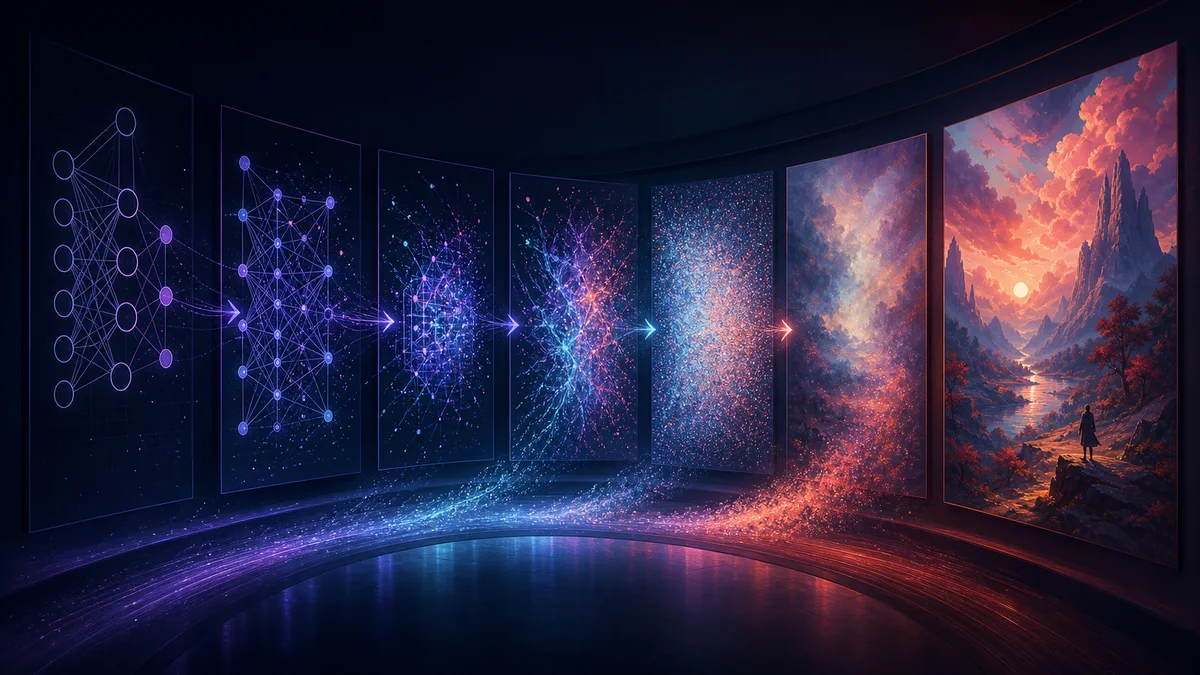
Diffusion models learn to reverse a gradual noising process. During generation, the system begins with noise and repeatedly predicts a cleaner representation, guided by learned conditions such as text. Research on denoising diffusion models, latent representations, and large image-text datasets made high-quality generation more practical.
Text-to-image systems in the early 2020s turned natural-language prompts into accessible controls. Latent diffusion reduced computation by operating in a compressed representation for much of the process. Products added inpainting, outpainting, image references, layout guidance, and editing. The interface shifted from adjusting explicit pixels toward describing intent and iterating on results.
Real-world examples
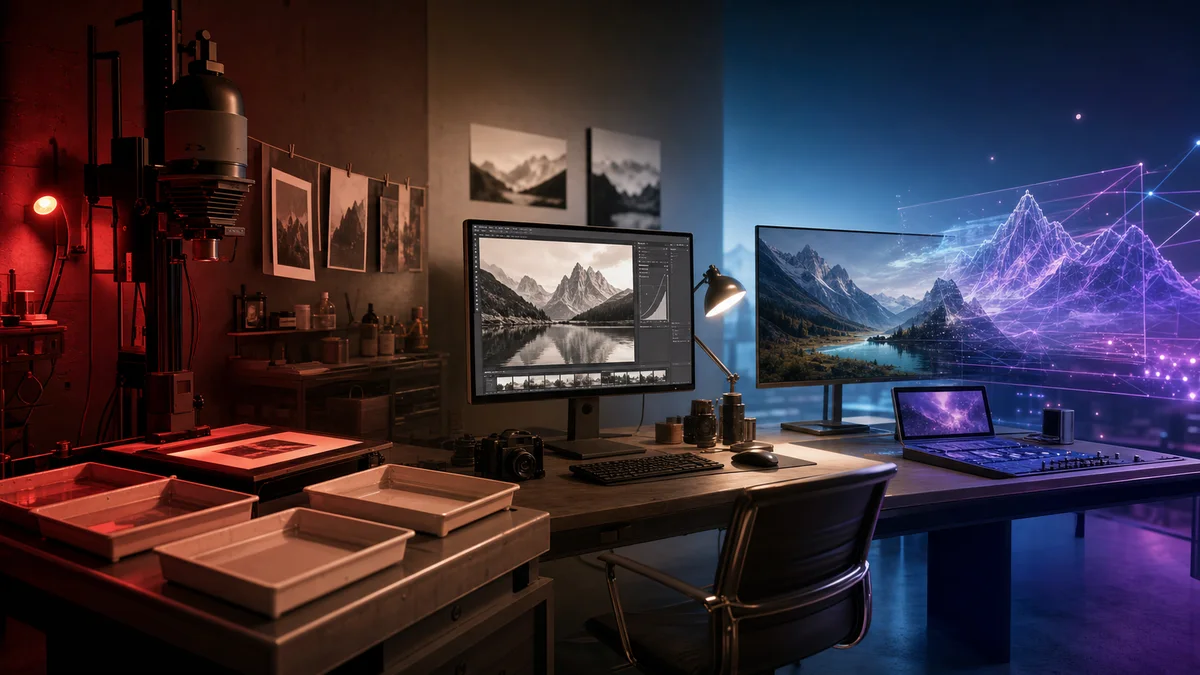
A filmmaker can explore lighting and set concepts before building an expensive scene. A teacher can create an original illustration tailored to a lesson. A small business can prototype a campaign mood before commissioning final photography. A game team can examine environment directions while artists maintain authorship over production assets.
Risks appear just as concretely. A generated product image can promise features that do not exist. A synthetic disaster photograph can circulate as news. A model can reproduce stereotypes or produce a mark resembling a signature. A client may assume “AI made it” means no rights, review, or disclosure obligations apply. Each workflow needs a clear use policy rather than a blanket assumption.
Advantages
- Rapid visual exploration lowers the cost of testing many concepts.
- Natural-language interfaces make image creation accessible to non-specialists.
- Inpainting and expansion can assist legitimate editing and format adaptation.
- Custom educational and accessibility visuals can be produced for narrow needs.
- Creators can use generation as one component in collage, illustration, and previsualization.
- Synthetic assets can reduce the need to expose a real person's identity in some scenarios.
Disadvantages and risks
- Training data may include works gathered without meaningful creator consent.
- Outputs can reflect stereotypes and uneven representation in data and evaluation.
- Realistic synthetic media can enable fraud, harassment, or political misinformation.
- Generated details, words, hands, reflections, and physical relationships can be wrong.
- Legal treatment of training and output rights varies by jurisdiction and continues to evolve.
- Low-cost generation can displace some paid work and flood marketplaces with repetitive content.
- Model training and large-scale inference use computing resources and energy.
Responsible generation for a website
Use original prompts and avoid requesting living artists' signatures or a confusing imitation of another brand. Do not generate public figures in deceptive situations, sexualized minors, private persons without consent, or false evidence. Review output at full size for hidden text, distorted anatomy, accidental logos, and misleading details.
Keep records of the prompt, tool, date, edits, and rights terms that applied. Label synthetic imagery when its origin could affect trust. For articles about history, generated covers should be understood as editorial illustrations, not archival photographs. Pixores can then resize, compress, or convert the approved asset without changing that provenance.
Frequently asked questions
Do image generators copy and paste training pictures?
Ordinary generation synthesizes from learned parameters rather than searching a folder and pasting one source image. Nevertheless, models may sometimes reproduce recognizable training elements, and questions about data collection and infringement remain important.
What is a diffusion model?
It is a generative approach trained to reverse a process that adds noise to data. At generation time, repeated denoising steps produce an image, often guided by text or another input.
Can AI-generated images be copyrighted?
Rules differ by country and depend on human authorship and contribution. Purely machine-generated material may receive limited or no protection in some jurisdictions. Obtain current legal advice for consequential commercial decisions.
Are AI images safe for advertising?
Not automatically. Review truthfulness, people and property releases, trademarks, product accuracy, platform policy, bias, and required disclosure before publishing.
Will AI replace photographers and illustrators?
It will change tasks and markets, but photography and illustration include judgment, relationships, lived context, direction, and accountability that generation does not simply erase. Outcomes will vary across fields.
Conclusion
AI image generation grew from decades of research in representation, adversarial learning, diffusion, language, and computing. It expands the visual toolkit, but capability is not permission and realism is not truth. The strongest practice combines creative experimentation with source awareness, human review, honest labeling, and respect for the people whose work and identity make visual culture possible.